Business Banking
Why, in a digital-first world, human support still matters in business banking

Digital banking has never been faster or more intuitive, but a seamless platform is now the baseline, not the differentiator. As businesses grow, their challenges become exceptions rather than patterns, and that’s exactly where automation reaches its limits. Peter King, OakNorth Director of Business Banking, makes the case for why human judgement and relationship banking are becoming the true mark of a great bank.
Business Banking
The hidden growth bottleneck many businesses overlook

Founders obsess over hiring, markets, and product — but rarely over scaling their banking. Yet as businesses grow, banking can quietly shift from enabler to bottleneck. Peter King, Director of Business Banking, explores the “underserved middle” of the market and what banking should deliver as complexity mounts.
Business Banking
How to earn interest on business cash without losing access to it

Most businesses are sitting on cash that’s earning far less than it could. This guide explains the difference between easy access, notice, and fixed-term accounts – and how to structure your cash across each so it’s working harder without creating operational risk.
Business Banking
What to look for when switching business bank accounts

Thinking about switching your business bank account? This guide covers everything from payment fees and multi-entity support to onboarding complexity and FSCS protection – so you know exactly what to look for before you make the move.
Business Banking
Banking that scales with you: Our 2025 product updates
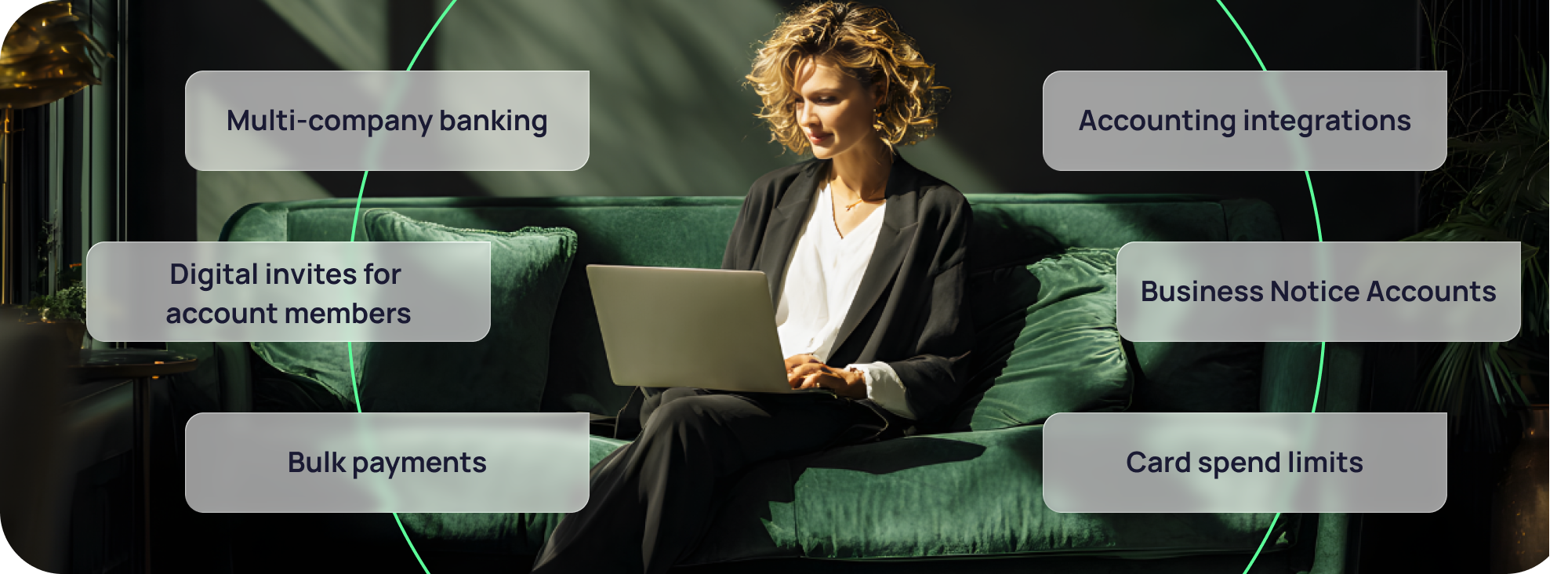
Running a scaling business means your banking should keep up, not hold you back. In 2025, we focused on the things mid-market businesses told us mattered most: managing complexity without friction, paying at scale without manual workarounds, and keeping tighter control as teams and spend grow.
Here is what we shipped.
Business Banking
What business leaders need from their bank in 2026 – and how we’re responding

From our conversations with SMEs and mid-sized businesses across the UK, one thing is clear: traditional business banking still creates too much friction. Too many silos? Too many processes. Too much time spent managing money rather than using it to grow the business.