Before you sign: three questions every CFO should ask their lender
Friday April 24th, 2026
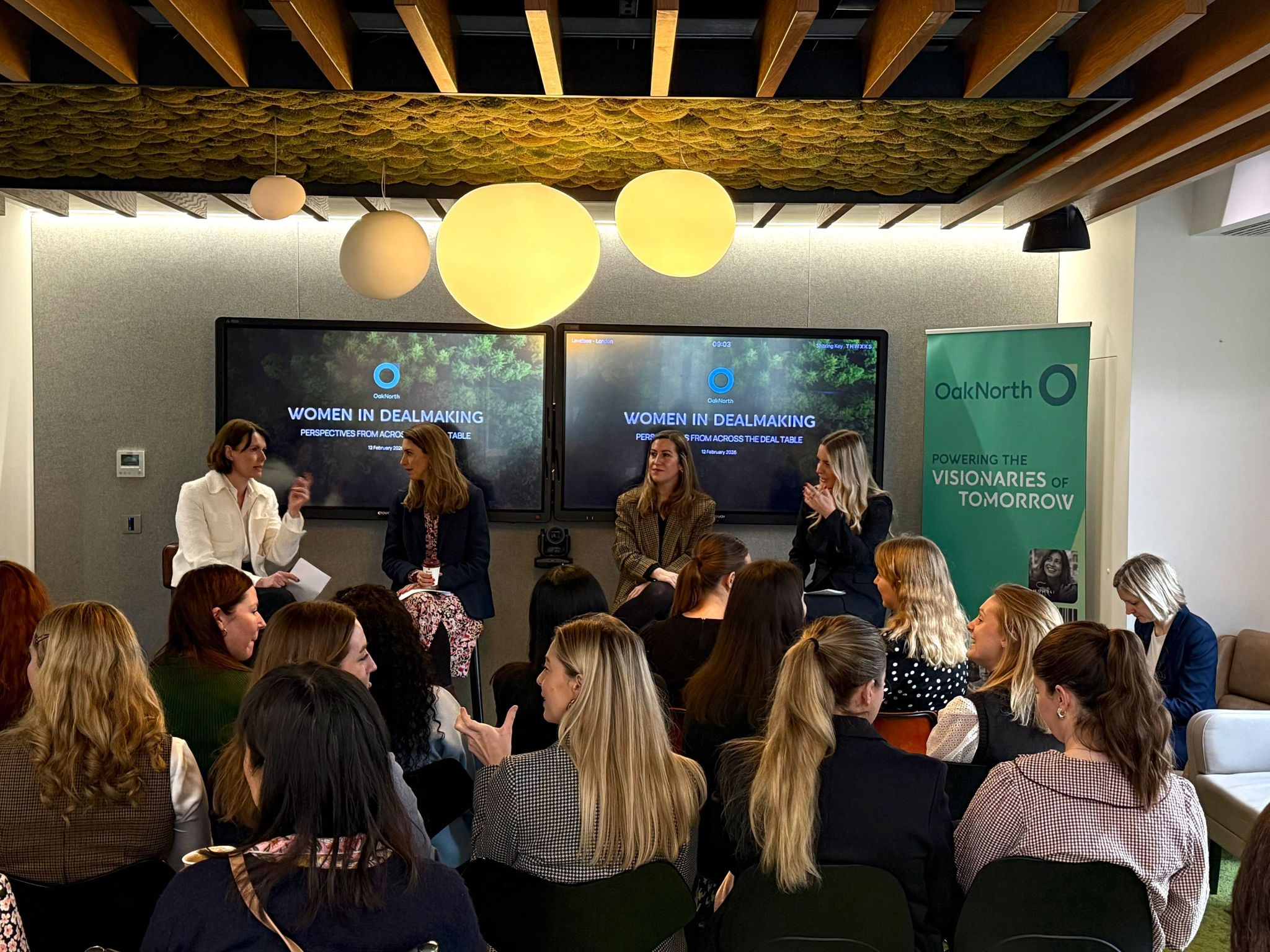
Lessons from Women in Dealmaking, an OakNorth event
In 2016, Vic Stewart, CFO of The Alchemist an OakNorth borrower, attended a dealmakers’ dinner in Manchester. She spent most of the evening counting the women collecting awards. There was one.
She went on to co-found the 6% Club, an initiative to get more women into deal-focused careers. Last year, 23 women picked up awards at that same dinner.
We mention this not as background, but because it’s relevant to what followed. The people most motivated to change who gets a seat at the table tend to be the same people who ask hard questions about how that table actually works: who holds the power, who makes the real decisions, and what happens when things go wrong.
That’s exactly the conversation we wanted to have.
OakNorth hosted a Women in Dealmaking panel at our London offices, bringing together Vic Stewart (CFO, The Alchemist), Julie Lada (Marlborough Partners), Alison Price (Queen’s Park Equity), and Julie Romer (Stephenson Harwood), moderated by Georgia Hutley from our Debt Finance team. The focus: what really makes a lending relationship work, and what breaks it.
Three questions came out of that discussion that we think every CFO should be asking before they sign.
1. Is this lender stable enough to be your partner?
Vic had seen it first-hand in a previous business. A lender gets into difficulty, sells off the debt, and a distressed fund buys it. Fees start loading immediately. A public wobble at your lender instantly raises questions about what it means for your facility, questions you don’t want to be asking mid-term.
Julie Romer put it plainly: the moment the finance documents are signed isn’t the end of the process. It’s the start of a three-, four- or five-year relationship. The tone set during negotiations carries into everything that follows. You don’t want either side feeling like the blood has been drained out of them.
Ask: what happens to my debt if something changes at your end?
2. Who actually makes the decision – and can you talk to them?
It can be frustrating as a borrower when the person you have built a relationship with isn’t the one making the call. The decision happens two levels up, often by people who have never met you or the business. The ability to move quickly and talk directly to the people who actually make the decision makes a material difference.
Julie Lada sees this from the advisory side too. When there are issues to resolve, the most productive conversations happen in a small room, with principals talking to principals. Large all-party calls rarely move things forward.
At OakNorth, borrowers are kept closely involved throughout the process, with direct access to decision-makers including the Credit Committee. Funding can be delivered in a matter of weeks.
Ask: when a decision needs to be made, who makes it – and will I have direct access to them?
3. Does this lender actually understand your sector?
When cost pressures hit hospitality over the last two years, Vic wanted a lender who understood what was happening across the industry. OakNorth lending to other hospitality businesses meant those conversations were grounded and informed by real sector context.
Alison Price framed it from the investing side: the best advisors and lenders don’t just solve the immediate problem – they think a few steps ahead. What does this business need today, and is the structure we’re putting in place built to last?
Ask: have you lent to other businesses in my industry – and what did you learn from it?
The best dealmakers we know, regardless of which side of the table they sit on, treat lender selection with the same rigour they’d apply to any other strategic decision. The questions above won’t guarantee a good outcome. But they’ll tell you a lot about whether you’re talking to the right partner.
Thinking about a refinancing, acquisition, or growth raise?
Talk to our Debt Finance team.